article-2-best-cbd-for-pain-relief
Table of Contents How We Evaluated These Products What to Look For in a CBD Pain Product Our Top 7...
Read more

The CBD market in 2026 offers dozens of product formats, but two dominate consumer spending: oils (tinctures) and gummies. Both deliver cannabidiol, but they do it through different pathways, at different speeds, and at different price points. Choosing between them depends on what matters most to you — fast relief, steady dosing, portability, or value.
This comparison covers the practical differences that actually affect your experience, based on current product testing and published bioavailability data.
CBD oil is taken sublingually — you hold it under your tongue for 30 to 60 seconds before swallowing. The thin tissue under your tongue absorbs CBD directly into your bloodstream, bypassing your digestive system. This route is called sublingual absorption, and it’s why oils tend to work faster.
CBD gummies are swallowed and digested like any other food. The CBD passes through your stomach and liver before reaching your bloodstream, a process called first-pass metabolism. Your liver breaks down a portion of the CBD before it enters circulation, which reduces the total amount that reaches your system.
| Factor | CBD Oil | CBD Gummies |
| Bioavailability | 20-30% | 10-20% |
| Onset Time | 15-30 minutes | 45-90 minutes |
| Duration | 4-6 hours | 6-8 hours |
| Dosing Precision | High (adjustable by drop) | Moderate (fixed per gummy) |
| Taste | Earthy, varies by brand | Flavored, typically sweet |
| Portability | Moderate (glass bottles) | High (resealable bags/jars) |
| Cost Per mg CBD | Lower | Higher |
| Discretion | Low | High |
Bioavailability measures how much of the CBD you consume actually makes it into your bloodstream. This is the single biggest functional difference between the two formats.
CBD oil delivers a bioavailability of roughly 20 to 30 percent when taken sublingually. That means if you take a 30-milligram dose, approximately 6 to 9 milligrams reach your bloodstream in active form.
CBD gummies deliver 10 to 20 percent bioavailability. That same 30-milligram dose would put roughly 3 to 6 milligrams into your system. The difference is first-pass metabolism — your liver processes and eliminates a portion of the CBD before it circulates.
In practical terms, you may need a higher milligram dose in gummy form to match the effects of a lower oil dose. This is worth considering when comparing prices.
If you want CBD to take effect quickly, oil is the better choice. Sublingual absorption starts working in 15 to 30 minutes for most people. Gummies take longer — typically 45 to 90 minutes — because they need to pass through your digestive system first.
The tradeoff is duration. Gummies tend to provide effects that last longer, in the range of 6 to 8 hours, compared to 4 to 6 hours for oils. The slower absorption creates a more gradual release curve.
This makes oils better suited for situations where you want faster onset, while gummies work well for sustained, all-day support.
CBD oil gives you granular control. Most tinctures come with graduated droppers marked in 0.25 or 0.5 milliliter increments. You can adjust your dose by a single drop if needed, which makes it easier to find and stay at your preferred level.
Gummies come in fixed doses — typically 10, 15, 25, or 50 milligrams per piece. That consistency is actually an advantage for people who have already found their dose. You don’t need to measure, count drops, or guess. Every gummy delivers the same amount.
For people just starting with CBD who want to titrate slowly, oils offer more flexibility. For experienced users with an established dose, gummies remove the guesswork.
[AFFILIATE CTA: Lazarus Naturals Full-Spectrum CBD Oil | Link: PENDING | Button Text: “Check Current Price →”]
CBD oil typically costs less per milligram of CBD. The manufacturing process for oils is simpler — fewer ingredients, less processing, and no flavoring or shaping steps. A standard 1,200-milligram CBD oil bottle might run $40 to $60, putting the cost at roughly $0.03 to $0.05 per milligram.
Gummies cost more to produce. The flavoring, shaping, and portioning add manufacturing expense, and that markup reaches the shelf price. A 30-count jar of 25-milligram gummies (750 milligrams total) often costs $30 to $50, or roughly $0.04 to $0.07 per milligram.
When you factor in the lower bioavailability of gummies, the effective cost gap widens further. You need more milligrams in gummy form to get the same functional dose as oil.
Taste is where gummies take a clear lead. CBD oil has a naturally earthy, sometimes grassy flavor that many people find unpleasant, even in flavored varieties. Gummies mask the hemp taste entirely with fruit flavors, making them far more approachable.
For portability and discretion, gummies also win. They look like regular candy, travel easily in a bag or pocket, and don’t require a mirror or careful dropper handling. You can take them anywhere without drawing attention.
Oil requires a bit more setup — holding the dropper steady, keeping the bottle upright in a bag, and tolerating the taste. Some people find the ritual of sublingual dosing calming, but others view it as inconvenient.
[AFFILIATE CTA: CBDfx Mixed Berry CBD Gummies | Link: PENDING | Button Text: “Check Current Price →”]
Choose CBD oil if you want faster onset, prefer adjustable dosing, prioritize cost efficiency, or are new to CBD and want to start low and titrate up slowly.
Choose CBD gummies if you want steady all-day effects, prefer consistent pre-measured doses, dislike the taste of hemp, or need something portable and discreet.
Consider both if you want the flexibility to use oil for faster relief when needed and gummies for daily maintenance. Many experienced CBD users keep both formats available.
Regardless of format, look for products with current third-party lab results and certificates of analysis. The evolving federal regulatory landscape makes independent testing more important than ever for confirming potency and purity. And if you also use CBD for pets, note that pet-specific formulations use different concentrations and flavoring — don’t share your human products with your animals.
Is CBD oil stronger than gummies? Milligram for milligram, CBD oil delivers more CBD to your bloodstream due to higher bioavailability (20-30% vs 10-20%). A 25mg oil dose provides roughly 1.5 times the effective CBD as a 25mg gummy.
Can I switch between CBD oil and gummies? Yes. Many people use both formats for different situations. Just be aware that dosing isn’t one-to-one — you may need a higher milligram count in gummy form to match your oil dose.
Do CBD gummies take longer to work? Yes. Gummies typically take 45 to 90 minutes to take effect, compared to 15 to 30 minutes for sublingual oil. However, gummy effects tend to last longer.
Which format is better for sleep? Gummies with added melatonin are popular for sleep support. Their longer duration (6-8 hours) aligns well with a full night’s rest. Oils work faster but may wear off sooner.
Are there quality differences between oils and gummies? Not inherently, but always check for third-party lab testing. Both formats can be made with full-spectrum, broad-spectrum, or isolate CBD. The quality depends on the manufacturer, not the format.
Last Updated: May 28, 2026 | CBDProducts.com Review Team
These statements have not been evaluated by the Food and Drug Administration. CBD products are not intended to diagnose, treat, cure, or prevent any disease.

Table of Contents How We Evaluated These Products What to Look For in a CBD Pain Product Our Top 7...
Read more
This article contains affiliate links. We may earn a commission from qualifying purchases at no extra cost to you. CBDfx...
Read more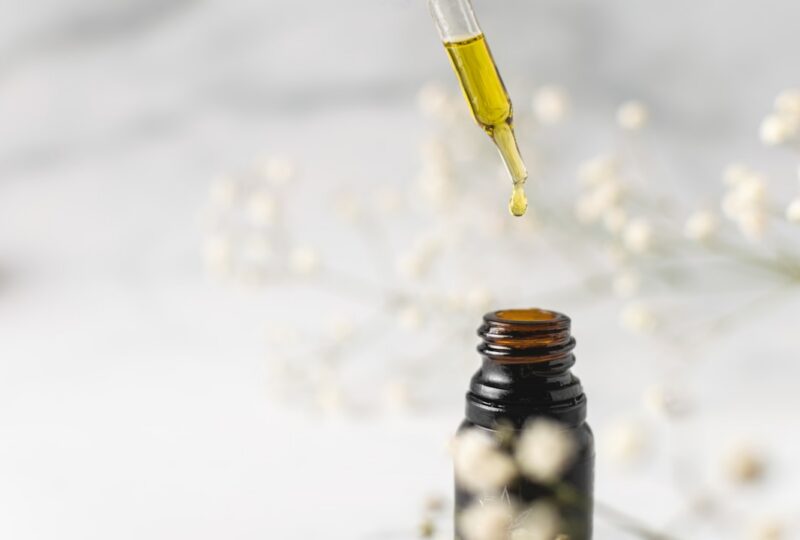
This article contains affiliate links. We may earn a commission from qualifying purchases at no extra cost to you. Charlotte's...
Read more
Interested in finding out more about what’s happening in the world of CBD and Medicinal Cannabis?
Head to CBD World News for the latest scientific research, clinical trials, and business news.
Abstract: Currently, there are no approved pharmacotherapies for addiction to cocaine and other psychostimulant drugs. Several studies have proposed that...
Read moreCredits: Albert Batalla†, Hella Janssen†, Shiral S. Gangadin and Matthijs G. Bossong († These authors contributed equally to this work.)...
Read moreAuthors: Kimberly A. Babson1 & James Sottile 2 & Danielle Morabito1 Publish Date: 27 March 2017 Published by: Springer Science+Business...
Read more