CBD Topicals for Joint Pain: Creams vs. Roll-Ons vs. Patches Compared
Affiliate Disclosure: This article contains affiliate links. We may earn a commission from qualifying purchases at no extra cost to...
Read more

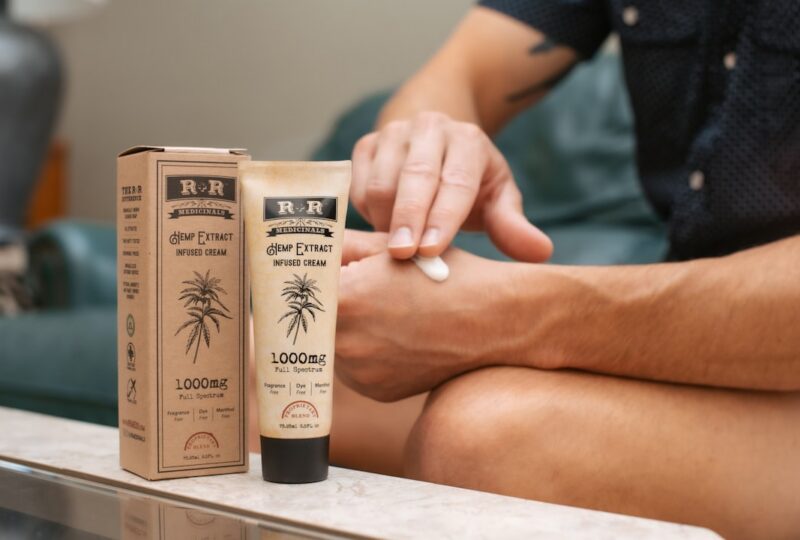
For joint pain, muscle soreness, or localized arthritis, CBD creams deliver direct anti-inflammatory action at the site of pain. Topical CBD penetrates skin to reach cannabinoid receptors in underlying tissues. Creams work best for pain you can physically reach—knees, shoulders, back, hands. Application delivers relief within 15-30 minutes for many users. Topical CBD doesn’t enter the bloodstream significantly, making it ideal for localized symptoms without systemic effects.
For widespread pain, fibromyalgia, or pain affecting multiple body areas, CBD oil (oral) offers systemic benefits. Sublingual oils bypass the digestive system and enter the bloodstream within 15-30 minutes, providing full-body anti-inflammatory action. CBD oils can modulate pain signaling in the central nervous system, addressing pain perception itself. For chronic pain conditions, oral CBD offers sustained relief lasting 4-8 hours per dose.
For localized pain: Apply 1/4 teaspoon of cream directly to affected area, 3-4 times daily. Concentrations of 500-1000mg per ounce are most effective. For systemic pain: Start with 10-15mg of oil daily, increase to 25-50mg based on response. For maximum benefit: Many pain patients use both—topical cream for acute flares and oral oil for daily symptom management.
Topical CBD creams have high localized concentration but low systemic absorption (2-5% enters bloodstream). Oral CBD oils have 6-20% bioavailability depending on formulation and fat content. Sublingual administration improves absorption compared to swallowing. For maximum pain relief, some patients combine modalities: morning oral oil for baseline control plus afternoon topical cream for activity-triggered flares.
Affiliate Disclosure: This article contains affiliate links. We may earn a commission from qualifying purchases at no extra cost to...
Read moreAffiliate Disclosure: This article contains affiliate links. If you purchase through our links, we may earn a commission at no...
Read more
For a comprehensive look at proven pain relief options, check out our best CBD oil for pain resource.
Read more
Interested in finding out more about what’s happening in the world of CBD and Medicinal Cannabis?
Head to CBD World News for the latest scientific research, clinical trials, and business news.
Abstract: Currently, there are no approved pharmacotherapies for addiction to cocaine and other psychostimulant drugs. Several studies have proposed that...
Read moreCredits: Albert Batalla†, Hella Janssen†, Shiral S. Gangadin and Matthijs G. Bossong († These authors contributed equally to this work.)...
Read moreAuthors: Kimberly A. Babson1 & James Sottile 2 & Danielle Morabito1 Publish Date: 27 March 2017 Published by: Springer Science+Business...
Read more